
Solar Power: Keep Cool & Cut Energy Costs
Discover how solar power provides an effective solution for homeowners and businesses seeking to stay cool while significantly reducing energy costs. Explore the benefits and savings of solar energy today!
Alfatech Team
4/16/2026
Cebu's tropical climate means your air conditioning runs almost constantly. This creates electricity bills that can drain your budget month after month. Solar power offers a practical solution for homeowners and businesses looking to keep cool while reducing energy costs.
Running aircon on solar energy has become increasingly viable in the Philippines. With abundant sunlight throughout the year, Cebu provides ideal conditions for solar panel systems to generate sufficient power for cooling needs.
How Solar Power Aircon Systems Work in Cebu
Solar power systems convert sunlight into electricity through photovoltaic panels installed on your roof. This solar energy can directly power your air conditioning units during daytime hours when the sun shines brightest.
Grid-Tied Solar System
Your solar panels generate electricity during the day. Excess power flows back to the grid, earning you credits through net metering. At night, you draw power from the grid using these credits.
Hybrid Solar System
The most common solar solution for residents in Cebu is the hybrid system, which combines the utility grid with battery storage, ensuring a reliable energy supply, even during outages.
The size of your solar system depends on your aircon's power consumption. A standard 1.5 HP split-type unit typically consumes 1,200 to 1,500 watts per hour. Running this unit for eight hours daily requires substantial solar panel capacity and battery storage if operating off-grid.
Peak Generation Advantage: Solar panels produce maximum power during the hottest parts of the day, precisely when you need air conditioning most. This natural alignment makes solar an excellent match for cooling needs in Cebu's tropical climate.
Sizing Your System for Aircon Needs
Proper system design starts with understanding your household energy consumption. Calculate your daily electricity usage to determine the appropriate solar panel capacity and configuration for your home.
Determining Panel Quantity and Capacity
A typical 1.5 HP aircon unit running for six hours daily needs approximately 6 kWh of electricity. To generate this power, you would need around 3 to 4 kilowatts of solar panel capacity, accounting for system efficiency and weather variations.
Standard solar panels produce 600 to 700 watts each under optimal conditions. For a 3 kW system, you would install 5 to 8 panels. Your rooftop must have sufficient space and proper orientation to accommodate this installation.
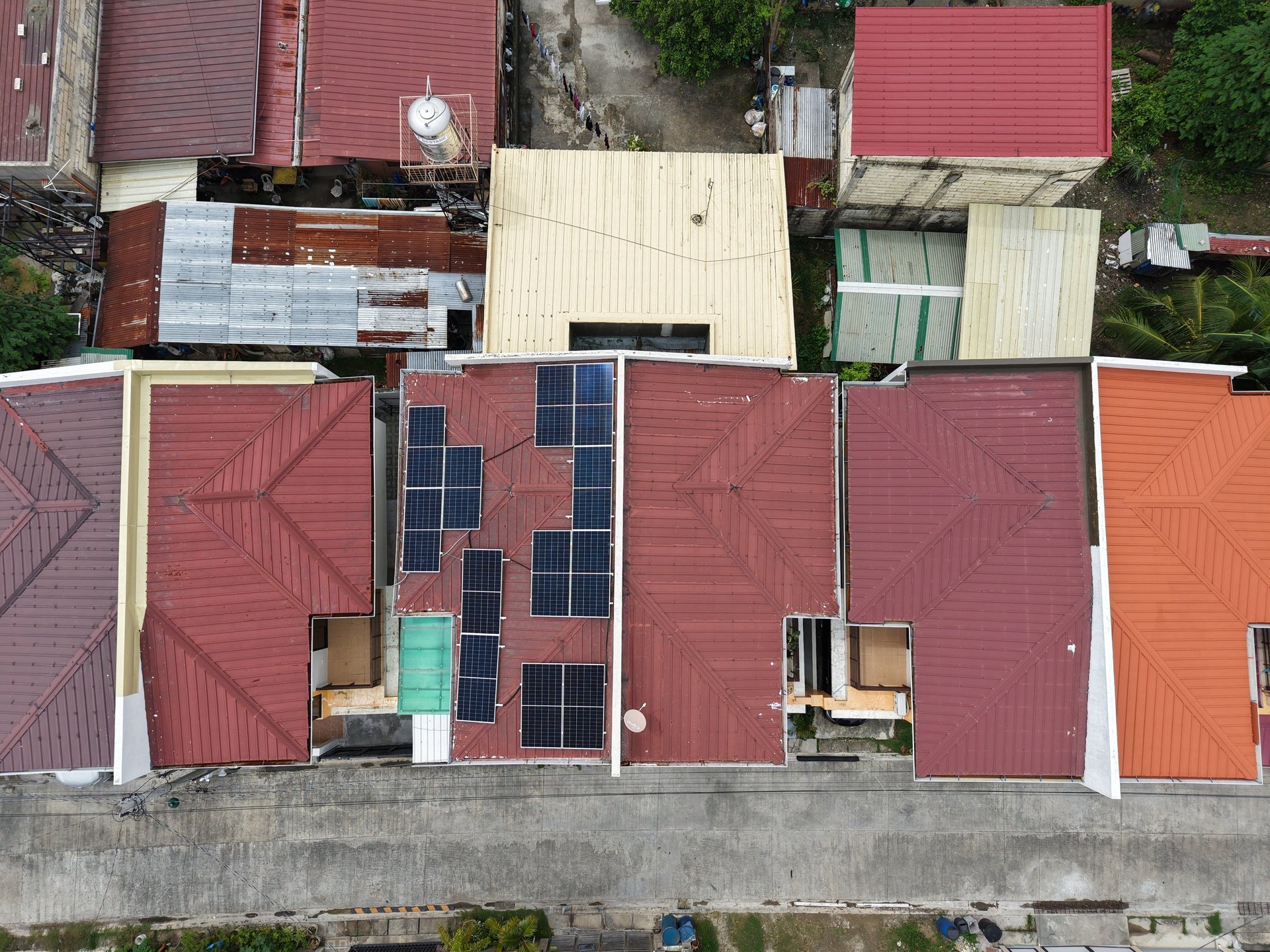
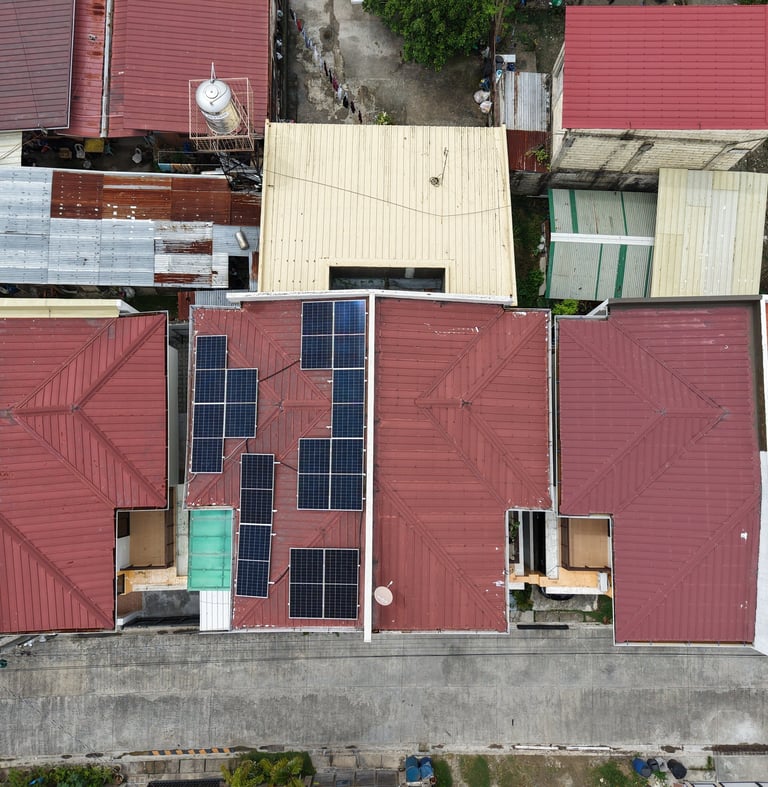
Small Home System
Capacity
6.34 kW
Coverage
1-2 aircon units plus household appliances
Panel Count
23 panels
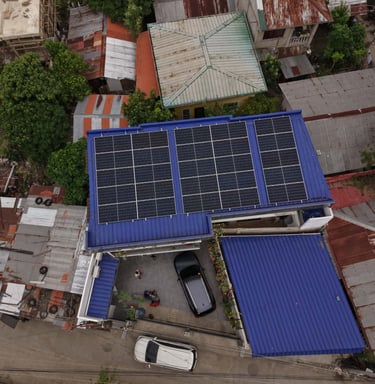
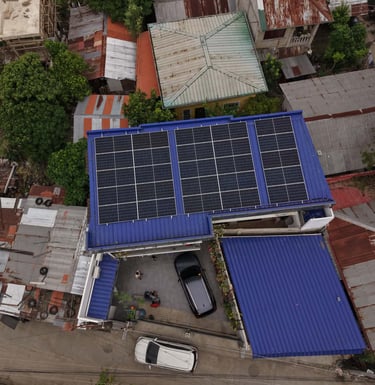
Medium Home System
Capacity
15.25 kW
Coverage
3-4 aircon units plus household appliances
Panel Count
23 panels
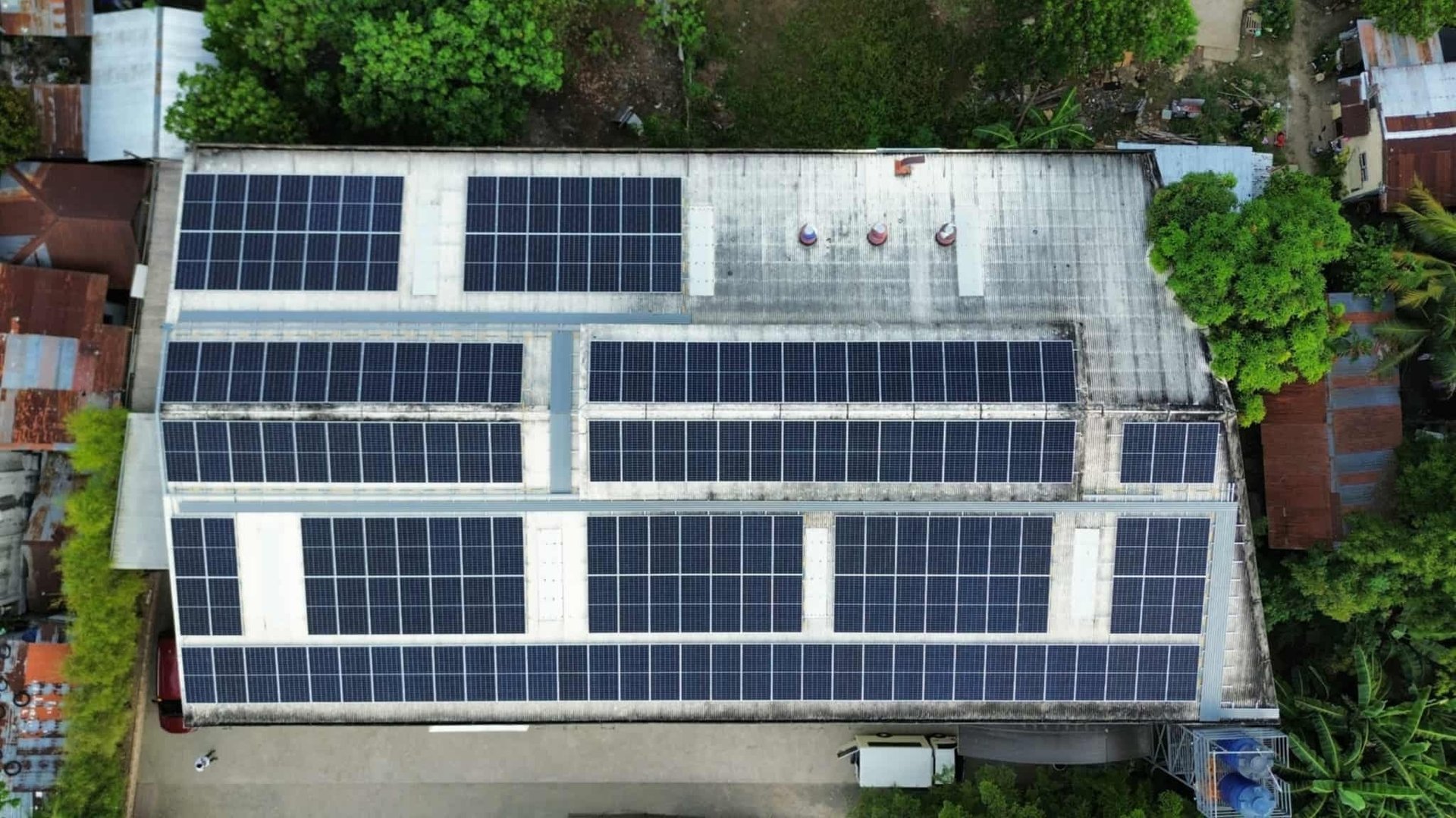
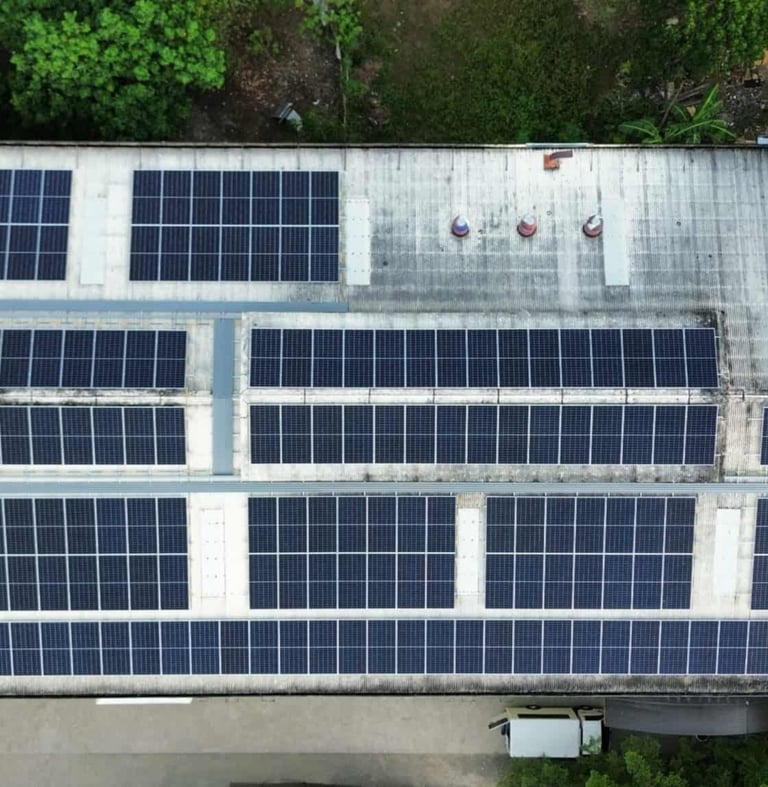
Business System
Capacity
80 kW
Coverage
5+ aircon units plus office needs
Panel Count
160 panels
Additional System Components
Beyond panels, your system requires an inverter to convert DC power to AC electricity for your aircon. Quality inverters ensure stable power delivery and protect your appliances. Battery systems add energy storage but significantly increase costs and maintenance requirements.
Not Sure What Size You Need?
Our team will analyze your electricity bills and roof space to design the perfect system for your cooling needs and budget.
Installation Price Ranges
Solar panel prices in Cebu vary based on system size, component quality, and installation complexity. Grid-tied systems typically cost between ₱50,000 to ₱70,000 per kilowatt installed. A 3 kW system suitable for running one or two aircon units ranges from ₱150,000 to ₱210,000.
For hybrid system, battery banks add ₱80,000 to ₱200,000 depending on storage capacity. These systems make sense for areas with unreliable grid power or those seeking complete energy independence.
Return on Investment Timeline
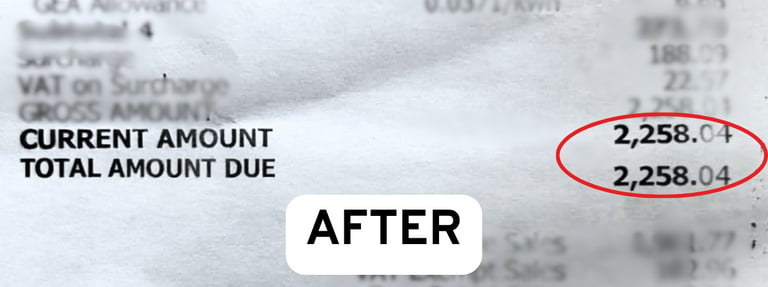
Most Cebu homeowners recover their solar investment within 4 to 8 years through electricity savings. Monthly bills typically decrease by 50 to 90 percent after installation. A household spending ₱5,000 monthly on electricity could save ₱3,000 to ₱4,500 each month with properly sized solar panels.
Over a 25-year panel lifespan, total savings can reach ₱900,000 to ₱1,200,000. This calculation assumes moderate electricity rate increases typical of Philippine utility companies. The actual return depends on your consumption patterns and future electricity costs.
Net Metering Benefits: The Philippine Net Metering program allows you to sell excess solar generation back to the grid. This system credits your account for surplus daytime power production, offsetting nighttime consumption from the grid.
Electricity Bill Reduction with Solar Aircon
Solar energy dramatically cuts monthly electricity expenses. Understanding your potential savings helps justify the initial investment and plan your budget for the installation.
With electricity prices ranging from ₱11 to ₱13 per kWh, solar panels have the potential to reduce 60 to 90 percent of this usage during peak generation periods.

Philippine Government Solar Incentives and Programs
National and local programs help reduce solar installation costs. Understanding available incentives maximizes your investment value and accelerates your return timeline.
Net Metering Program
The Philippine Net Metering scheme allows residential and commercial solar users to export excess power to the distribution grid. Your utility company credits your account for this exported energy at a rate close to retail electricity prices. This arrangement eliminates the need for expensive battery storage while maximizing your solar investment.
Qualified systems must not exceed 100 kW capacity. Application requires submission to your local distribution utility. Most Cebu installations qualify easily under this program, particularly residential systems designed for aircon and household consumption.
Tax Exemptions and Duty-Free Imports
Solar equipment imported for renewable energy projects enjoys duty and VAT exemptions under the Renewable Energy Act. These exemptions reduce equipment costs significantly. Work with certified installers who understand these benefits and can help you access them properly.
Available Incentives
Net metering credits for excess generation
VAT exemption on solar equipment
Duty-free importation of components
Income tax holiday for qualifying projects
Special realty tax rates for solar facilities
Accelerated depreciation allowances
Cebu-Specific Programs
Some Cebu municipalities offer additional property tax reductions for homes with solar installations. Check with your local government unit about available programs. Business establishments may qualify for additional incentives under green building certifications.
Top Solar Panel Brands Available in Cebu
Selecting quality components ensures system longevity and performance. Several international and local brands serve the Cebu market with proven track records in tropical climates.
Trina Solar, and JinkoSolar dominate the Philippine market. These manufacturers offer 20-year performance warranties and proven durability in harsh tropical conditions. Their panels withstand typhoon-force winds and heavy monsoon rains common in Cebu.
Inverter Selection
Quality inverters convert DC solar power to AC electricity for your aircon. Solis, Deye, and Goodwe lead in reliability and efficiency. These brands offer monitoring apps to track your system performance in real-time from your smartphone.
Hybrid inverters allow future battery addition without system replacement. This flexibility helps if you want to start with grid-tied operation and add storage later. The marginal additional cost provides valuable future-proofing for your investment.
Solar Installation Process and Timeline
Professional installation ensures system safety and optimal performance. Understanding the process helps you prepare and coordinate with contractors effectively.
Site Assessment and Design
They measure available space, check structural capacity, and assess shading from nearby trees or buildings. This assessment determines optimal panel placement for maximum sun exposure throughout the day.
Engineers design your system based on electricity consumption patterns and roof characteristics. They calculate panel quantity, inverter size, and wiring configuration. Proper design ensures your system meets your aircon needs while maintaining safety margins.
Initial Consultation: Discuss your energy goals, review electricity bills, and explain available system options for your budget and requirements.
Site Survey: Technical team measures roof dimensions, checks structural integrity, evaluates shading patterns, and photographs installation area.
System Design: Engineers create custom layout, select components, calculate expected generation, and prepare detailed quotation with specifications.
Equipment Procurement: Order panels, inverters, mounting hardware, and electrical components from suppliers with quality certifications and warranties.
Installation: Mount racking system, install panels, connect wiring, set up inverter, and complete electrical connections with safety inspections.
Activation: Final utility approval, system turned on, monitoring activated, homeowner training on system operation and maintenance requirements.
Installation Timeline
Typical residential installations take 2 to 5 days for physical work. However, the complete process from consultation to activation spans 4 to 8 weeks due to preparation, processing and utility coordination. Commercial installations require longer timelines based on system complexity.
System Monitoring
Modern inverters include monitoring apps showing real-time generation. Check your app weekly to spot performance issues early. Sudden drops in power output indicate potential problems requiring professional attention.
Annual professional inspections verify electrical connections, check mounting hardware, and test inverter function. These inspections cost ₱3,000 to ₱6,000 but prevent expensive repairs from undetected damage or wear.
Maintenance Advantages
Simple cleaning procedures homeowners can perform
No moving parts means minimal wear and tear
Remote monitoring detects issues immediately
Long component life reduces replacement frequency
Local service providers available throughout Cebu
Maintenance Considerations
Tropical weather accelerates dust accumulation
Typhoon season requires pre-storm inspections
Coastal locations face salt spray corrosion
Professional roof access needed for safety
Warranty Coverage
Panel manufacturers typically provide 20-year performance warranties guaranteeing 80 percent output. Inverters carry 5 to 10-year warranties with extended coverage available. Installation workmanship warranties cover labor for 1 to 5 years depending on your contractor.
Keep all warranty documentation accessible. Register products with manufacturers immediately after installation. Document your system's serial numbers and installation date for future service needs.
Important Factors for Cebu Homeowners
Several practical considerations affect your solar aircon project success. Planning for these factors helps avoid surprises and ensures smooth installation and operation.
Property Value Impact
Solar installations typically increase property values by 3 to 5 percent. Buyers recognize the value of reduced electricity costs. Quality installations with transferable warranties attract higher offers when you eventually sell your home.
Can I install solar panels myself to save money?
DIY solar installation is not recommended and violates Philippine electrical codes. Licensed electrical engineers must design, install, and certify solar systems. Improper installation creates fire hazards, voids warranties, and prevents utility interconnection approval. Professional installation ensures safety, optimal performance, and warranty protection.
What happens during power outages with grid-tied systems?
Standard grid-tied systems shut down automatically during outages for utility worker safety. Your solar panels will not power your home during blackouts unless you add battery storage. Hybrid systems with batteries provide backup power during outages while maintaining grid connection benefits.
How do typhoons affect solar panel systems?
Quality installations withstand typhoon-force winds up to 200 kph when properly mounted. Panels undergo rigorous wind testing before certification. Experienced Cebu installers use reinforced mounting systems designed for tropical storm conditions. Proper installation following manufacturer specifications ensures storm survival.
Will solar panels work during rainy season?
Panels generate electricity even on cloudy days, though at reduced capacity. Expect 10 to 30 percent of normal output during overcast conditions. Annual production calculations account for monsoon season variations. Grid-tied systems draw from utility during low generation periods, ensuring continuous aircon operation regardless of weather.
Can I expand my system later if my needs increase?
Most systems allow future expansion if you have available roof space and inverter capacity. Plan for growth during initial design by selecting appropriately sized inverters. Adding panels later costs more per watt than installing them initially, but remains feasible with proper planning and compatible equipment selection.
Choosing the Right Solar Solution in Cebu
Solar power offers Cebu residents genuine relief from high electricity bills while supporting environmental sustainability. The technology has matured significantly, with proven performance in tropical climates and competitive pricing that delivers solid returns on investment.
Utilize government incentives and net metering to maximize investment value. Choose local installers with experience. Invest in quality components from reputable manufacturers with strong warranties.
Abundant sunshine, high electricity rates, and advanced solar technology make Cebu ideal for solar systems. Your investment leads to reduced energy costs and cleaner air with lower carbon emissions.
Ready to Start Your Solar Journey?
Get a comprehensive site assessment and custom system design tailored to your Cebu property. Our certified installers handle all permits and utility coordination.
Call +63 968 164 2134
or click the button below.
Contact
Have any questions? Looking for a quote?
The fastest way to reach us is by phone or through Facebook Messenger.
PHONE
+63-968-128-2302 (North Cebu)
+63-968-164-2134 (South Cebu)
+63-935-038-1034 (Mindanao)
© 2025. All rights reserved.
INSTAGRAM & THREADS
@alfatechph
ADDRESS
MD Echavez Street, Maguikay, Mandaue City, Cebu, 6014